

Meet the team
Adjunct Fellows
-

Postdoctoral Fellows
-

-

-
-
Research Staff
-
-
-
Students
-
-

-
About us
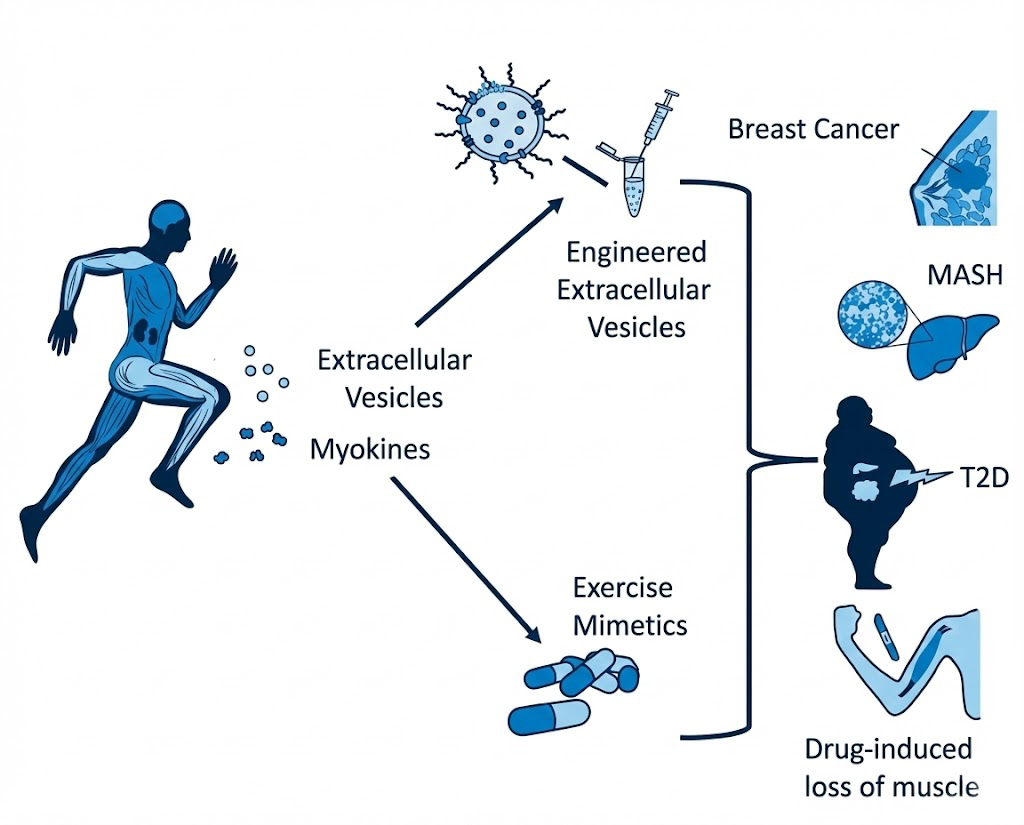
For over 25 years, the Cellular and Molecular Metabolism laboratory has been at the forefront of research identifying molecules that link physical activity to protection from obesity-related diseases. We're translating this understanding into the development of 'exercise mimetics' — therapies that replicate the beneficial effects of exercise — with some already in clinical development.
Addressing the fastest-growing diseases
Type 2 diabetes, metabolic dysfunction-associated steatohepatitis (MASH) and breast cancer — all linked to obesity — are amongst the fastest-growing diseases worldwide. Our research program focuses on developing novel therapies and bioengineered extracellular vesicles (EVs) uncovered from exercise studies to treat these diseases and mitigate side effects associated with current drugs.
What are extracellular vesicles?
Extracellular vesicles are cell-derived membrane-surrounded vesicles that carry bioactive molecules and deliver them to recipient cells. Approximately six years ago, we identified that organ-to-organ communication during exercise is largely mediated by EVs. Since then, we've performed extensive preclinical experiments showing that exercise-derived EVs are a mechanism by which exercise confers benefit in breast cancer, type 2 diabetes and MASH.