

Meet the team
Research staff

About us
The Lipoproteins and Atherosclerosis laboratory focuses on systemic and cellular lipid metabolism and the cardiometabolic complications of infectious diseases — revealing surprising connections between infections and heart disease.
Cholesterol: essential but dangerous
It's well documented that too much cholesterol in the blood causes many cardiovascular diseases. To travel in the bloodstream, cholesterol combines with protein to form lipoproteins, which carry cholesterol throughout the body. Lipoproteins transport cholesterol to and from vessel walls — if too much is delivered and too little removed, it accumulates there. This accumulated cholesterol causes fatty deposits to build up in vessel walls, a process known as atherosclerosis, the underlying cause of heart attacks.
Recent research has established that cholesterol inside cells is also a potent regulator of many aspects of cellular metabolism. Excessive cellular cholesterol causes metabolic dysregulation, contributing to the development of various metabolic diseases.
The infection-cardiovascular disease connection
A connection between infectious and cardiovascular diseases has been known for a long time. However, whilst the mechanisms by which genetic and environmental factors contribute to cardiovascular disease burden have been elucidated in great detail, the role of infections has remained in the shadows.
Frequent metabolic and cardiovascular complications of HIV disease reignited interest in infections as a cause of cardiovascular disease. Recent findings that COVID-19 infection causes cardiovascular and/or metabolic sequelae in over 50 per cent of recovered patients make this connection even more important to understand.
How microbes hijack cholesterol
Many microbes — especially viruses — require cholesterol to survive. Since microbes cannot make cholesterol themselves, they 'steal' it from the infected organism. To do so, they've developed sophisticated tools to 'hijack' cellular cholesterol metabolism and commandeer it for their own purposes, which usually don't coincide with the interests of the infected organism.
Some microbes force cholesterol to accumulate both in the blood and inside cells, causing development of atherosclerosis and metabolic diseases. Further, microbes force infected cells to release 'signals' to other cells that aren't infected, coercing them to alter their cholesterol metabolism as well — creating an environment favouring the microbe.
Microbes can cause long-term damage to cholesterol metabolism, contributing to the risk of cardiometabolic diseases even after successful treatment has eliminated the microbe.
Vulnerability becomes opportunity
On the brighter side, such dependence of microbes on cholesterol creates vulnerability, making cholesterol metabolism a promising therapeutic target to tackle both infectious diseases and their cardiometabolic sequelae. Drugs affecting lipid metabolism — which are so successful in preventing cardiovascular diseases — can be modified for use against infections and their comorbidities. The principles behind these drugs can be used to develop new ways to target infections and metabolic disorders.
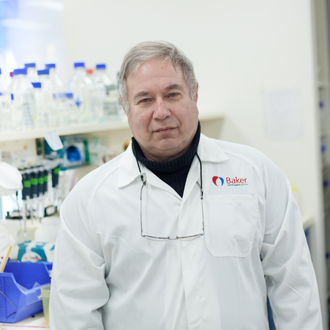
Professor Dmitri Sviridov and his team investigate the metabolism of cholesterol and the mechanisms responsible for dysregulation of its metabolism in the context of infectious, cardiovascular and metabolic diseases.
Research highlights: HIV and cardiometabolic complications
One of our most significant ongoing projects investigates the development of cardiometabolic comorbidities in people living with HIV. Advanced treatments have enabled people with HIV to live longer lives, revealing that these patients have a higher incidence of heart disease and metabolic complications than other community members.
It was initially believed this higher incidence resulted from adverse effects of HIV treatment, as these drugs are known to increase plasma cholesterol. However, Professor Sviridov's group and collaborators discovered that the HIV virus itself modifies cholesterol metabolism to such an extent that infected cells begin accumulating cholesterol.
Moreover, infected cells release 'signals' causing accumulation of cholesterol in non-infected cells as well, and affect the blood's capacity to receive excess cholesterol from these cells. Crucially, we've found that if the pathway causing HIV-infected cells to accumulate cholesterol can be controlled, this will not only reduce the development of cardiometabolic comorbidities in infected people, but will also reduce HIV virus activity.
Similar research has been undertaken with two other pathogens: cytomegalovirus (CMV) and prions.
Research focus
- Molecular and cellular mechanisms of cholesterol metabolism.
- Understanding how cholesterol moves and functions at the cellular level.
- Regulation of cellular metabolism by 'lipid rafts'.
- Investigating how specialised membrane structures control cellular processes.
- Development of new therapeutics.
- Creating treatments to facilitate removal of cholesterol and prevent disease.
- Infections and cardiometabolic diseases.
- Exploring the mechanisms linking infections to heart and metabolic conditions.
- Clinical aspects of cholesterol metabolism.
- Translating laboratory discoveries into clinical applications.
- Lipid metabolism and metabolic diseases.
- Understanding how disrupted lipid metabolism contributes to metabolic disorders.