About the Metabolomics laboratory
Lipid metabolism is central to human health. Its dysregulation underpins multiple diseases, including obesity, type 2 diabetes, cardiovascular disease, and age-related dementia. Whilst lipid metabolic pathways are well characterised, their dysregulation resulting from environmental and genetic influences is less well understood, particularly in chronic disease.
The Metabolomics laboratory has developed Australia's only high-throughput lipidomic platform using state-of-the-art tandem mass spectrometry. We've performed some of the largest clinical and population lipidomic studies yet reported, enabling us to characterise metabolic pathways and identify lipidomic biomarker profiles that better predict disease risk and therapeutic efficacy.
Modulation of these same pathways now holds potential as an interventional strategy to prevent, attenuate or treat major chronic diseases.
Our overarching goal
The Metabolomics laboratory aims to develop strategies that elucidate and combat the metabolic underpinnings of cardiometabolic disease. By applying our state-of-the-art lipidomic capabilities, we're characterising the relationship between lipid metabolism and cardiometabolic disease. Clinical translation of outcomes from these studies will deliver new diagnostic tests, risk assessment tools, disease monitoring approaches, and therapeutic interventions for chronic disease.
Research focus
Building on our substantial body of work over recent years, we have six specific areas of focus:
- Population metabolism and biomarker discovery
Applying high-throughput lipidomic technology to profile large populations and clinical cohorts, identifying new lipidomic biomarker profiles for chronic disease that improve risk assessment, early detection and monitoring.
- Lipidomic/genomic integration to identify causal pathways
Generating combined lipidomic/genomic datasets for Mendelian randomisation studies to identify causal links between lipid metabolism and metabolic disease — distinguishing cause from correlation.
- Preclinical/mechanistic studies in metabolic therapy
Our discovery strategies have identified several metabolic pathways representing potential therapeutic targets. We're characterising the mechanisms and validating these targets in preclinical models.
- Translational metabolomics — new therapies for metabolic disease
We've progressed one new therapeutic strategy to a Phase 0/1 clinical trial with promising results. We're now moving towards the clinical validation required for the commercialisation of this and other new therapeutic targets.
- Translational metabolomics — development of new tests for metabolic health and disease
We have developed a Clinical Lipidomics Platform and are working to translate a series of lipidomic-based blood tests to provide improved risk assessment for cardiovascular disease and diabetes as well as measures of metabolic health.
- Development of lipidomic and metabolomic capabilities in Australia
We continue to develop our lipidomic and metabolomic technology and make this available to the broader research community, building national and international capacity in metabolomics research. Read more...
Impact and vision
Our research program characterises the environmental and genetic influences on metabolism, providing the fundamental understanding needed to select optimal biomarkers for risk assessment and therapy monitoring, and to assist in developing policy that maintains metabolic health in an ageing population.
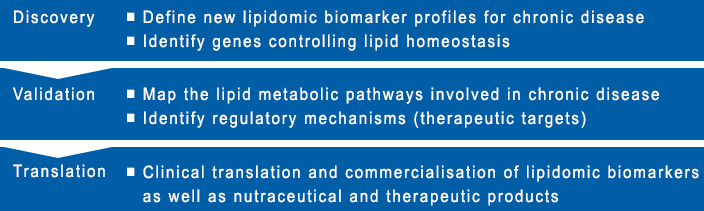
From discovery through validation to translation, we're building a comprehensive pipeline that transforms metabolic insights into real-world health improvements.
Community engagement
We collaborate with the Baker Institute's Community Engagement Group to embed meaningful consumer and community voices into our research. This engagement has helped shape our study direction, refine recruitment and messaging, and support more relevant, accessible and impactful outcomes for people affected by obesity, type 2 diabetes, cardiovascular disease and age-related dementia.