

Innovative new research is harnessing nanotechnology to deliver one-off treatments that will change the future for heart attack survivors.
Every day 150 people in Australia are hospitalised after suffering a heart attack. Thanks to lifesaving treatments unlocked by research, more people than ever are surviving them [1].
But, survivors face new risks, including a greater chance of having a second, potentially deadly cardiac event within 90 days.
Right now, one of our teams at the Baker Institute is taking a world-leading approach to reducing this terrible risk with a treatment that could save countless lives.
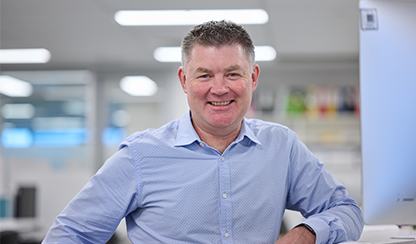
Globally recognised cardiovascular immunology expert, Dr Tin Kyaw (pictured), leads our Inflammation and Cardiovascular Disease laboratory. Over the course of his career, his work has helped to fundamentally reshape our understanding of how antibodies function in heart attacks.
Now, he and his team are exploring exciting new ways to translate immunology breakthroughs into lifesaving treatments for heart attack survivors.
“My aim is to reduce the high risk of recurrent, often fatal heart attacks in heart attack survivors.” — Dr Tin Kyaw.
Inflammation could be the enemy
“After a heart attack, inflammation in the coronary arteries is greatly elevated,” says Tin. “This can contribute to a second heart attack.”
In recent years, medications that reduce inflammation in the coronary arteries have been trialled in heart attack survivors. Unfortunately, the drugs trialled to date have not only suppressed inflammation in the patient’s heart arteries or plaques, but also impaired the patient’s whole immune system, leading to significant unwanted side effects.
“This is not what we want,” says Tin. “We need to make something that is going to prevent only artery inflammation.”
Precision control to silence harmful antibodies
Building on this existing knowledge base, Tin and his team are developing a precision approach to turn off unwanted antibodies, to reduce artery inflammation after a heart attack, and to prevent a second event.
Antibodies are complex. Usually, antibodies trigger an immune response that helps the body heal. However, problematic antibodies produced in an autoimmune response can mistakenly attack our own cells and cause damage.
In heart disease, they can attack our cells, causing damage that eventually leads to a heart attack. Then, at the time of the heart attack, the body produces a massive surge of these antibodies. This unwanted spike causes further, irreparable damage and leads to dangerous inflammation. So, inflammation makes even more inflammation.
Tin and his team are exploring ways to prevent this surge of problematic antibodies precisely.
“My idea is to prevent the expansion of the problematic antibodies at the time of a heart attack,” explains Tin. “But to let other good antibodies protect us the rest of the time — like a vaccine does.”
New treatments, new futures
Currently at the Preclinical research stage, Tin and his team are investigating the use of next-generation technology to deliver targeted drugs that prevent problematic antibody spikes during a heart attack while allowing the useful antibodies to continue protecting us.
This could result in an immediate halt on arterial inflammation and reduce the risk of further fatal heart attacks for heart attack survivors.
“Basically, we could prevent antibody expansion, prevent accelerated atherosclerotic progression and make the plaque more stable,” says Tin. “If a patient has a heart attack and is brought to the hospital, we can give the treatment in the Emergency Department. As it’s a single shot, the patient doesn’t need to adhere to the long-term administration. That’s it.”
Supported by people like you, in the year ahead, Tin and his team will continue this lifesaving research, aiming to move into the Proof-of-concept/Phase I Trials stage, and a step closer to having this lifesaving treatment available to us all.