

0 item $0.00

Cellular and Molecular Metabolism

Read more

Laboratory head

Close
i Profile of author
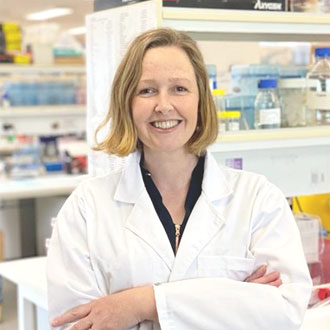
Professor Mark Anthony Febbraio

Laboratory Head | NHMRC L3 Investigator

Latest Achievements

Professor Mark Febbraio is considered one of Australia’s leading Medical Researchers and an international leader in the field of cell metabolism. His major discovery was that skeletal muscle is an endocrine organ that can produce and/or secrete proteins, resulting in coining the now widely-used term ‘myokine’. He identified that the cytokine IL-6 was the prototypical myokine that can affect the metabolism of vital organs and also enhance insulin sensitivity.

In a seminal paper published in 2019, Professor Febbraio synthesised a novel peptide that activates the gp130 receptor signalling complex called IC7Fc. IC7Fc displayed remarkable efficacy for treating metabolic syndrome in pre-clinical models. Professor Febbraio showed that IC7Fc improves glucose tolerance and hyperglycemia and prevents weight gain and liver steatosis in obese mice. Moreover, in comprehensive human cell-based assays, and in a safety study in non-human primates, IC7Fc was found to be safe, without any adverse events, or adverse toxicology and no signs of immunogenicity or inflammation. The publication was covered extensively by the international press and was hailed as a “potential wonder drug” to treat obesity and Type 2 Diabetes (T2D). Professor Febbraio is the principal inventor of several patents for IC7Fc. In this capacity, next generation molecules have been developed and human clinical trials have been planned.

International Biochemistry of Exercise Honour Award (2026)

Australian Physiological Society Medal (2024)

Kirsten and Freddy Johansen Rigshospitalet International Award for Danish Medical Science (2022)

Read full biography
Professor Mark Anthony Febbraio Laboratory Head | NHMRC L3 Investigator
Our research is focussed on understanding mechanisms associated with exercise, obesity, type 2 diabetes and cancer and our goal is to develop novel drugs to treat lifestyle related diseases.

Staff

Adjunct Fellows

Dr John Scott

Postdoctoral Fellows

Dr Benoit Smeuninx Dr Surafel Tegegne Dr Lauren Terry Dr Sarah Turpin-Nolan

Research Staff

Casey Egan Emma McLennan Steve Risis

Students

Raphael Delisavvas Jiangdeng Lai Eudora Lu Simon Yu


About the Cellular and Molecular Metabolism laboratory

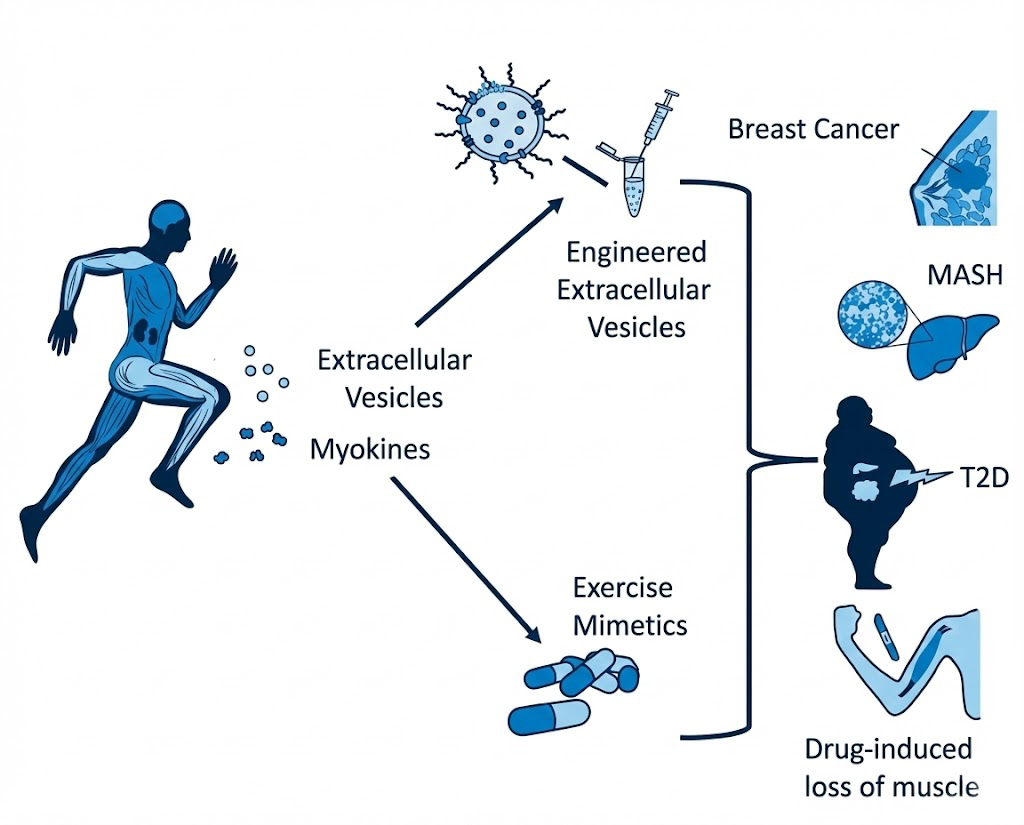
For over 25 years, the Cellular and Molecular Metabolism laboratory has been at the forefront of research identifying molecules that link physical activity to protection from obesity-related diseases. We're translating this understanding into the development of 'exercise mimetics' — therapies that replicate the beneficial effects of exercise — with some already in clinical development.

Addressing the fastest-growing diseases

Type 2 diabetes, metabolic dysfunction-associated steatohepatitis (MASH) and breast cancer — all linked to obesity — are amongst the fastest-growing diseases worldwide. Our research program focuses on developing novel therapies and bioengineered extracellular vesicles (EVs) uncovered from exercise studies to treat these diseases and mitigate side effects associated with current drugs.

What are extracellular vesicles?

Extracellular vesicles are cell-derived membrane-surrounded vesicles that carry bioactive molecules and deliver them to recipient cells. Approximately six years ago, we identified that organ-to-organ communication during exercise is largely mediated by EVs. Since then, we've performed extensive preclinical experiments showing that exercise-derived EVs are a mechanism by which exercise confers benefit in breast cancer, type 2 diabetes and MASH.

Cellular and Molecular Metabolism laboratory overview

Research focus

Exercise-derived extracellular vesicles in lifestyle diseases
Investigating how EVs released during exercise can be harnessed as therapeutic tools for treating breast cancer, type 2 diabetes and MASH — potentially creating 'exercise in a bottle' for patients unable to exercise.

Chimeric cytokine proteins as adjunct therapies
Engineering novel chimeric gp130 ligands (IC7Fc) to treat metabolic disease whilst preserving muscle mass. Our landmark research demonstrated remarkable efficacy in preclinical studies with no inflammation or immunogenicity. Next-generation molecules will soon enter clinical trials, with particular interest in using IC7Fc as an adjunct to GLP-1RA weight-loss drugs to prevent muscle loss.

AI-driven multi-omics research for metabolic disease
Harnessing artificial intelligence and machine learning to integrate multi-omics data, uncovering novel disease biomarkers and therapeutic targets for MASH, obesity and diabetes. This work aims to develop non-invasive diagnostic tools and inform precision medicine strategies whilst providing web-based applications for the broader scientific community.

Novel therapies for MASH and hepatocellular carcinoma
Exploring how metabolic dysfunction-associated steatohepatitis (MASH) progresses to liver cancer (HCC) using transgenic mouse models that mimic human disease. We're identifying mechanisms that catalyse cancer development and assessing circulatory markers as biomarkers for early detection, whilst testing multiple therapeutic approaches including lifestyle interventions, drug candidates and chimeric proteins.

Support us

With the rising number of Australians affected by diabetes, heart disease and stroke, the need for research is more critical than ever.

Find out more